

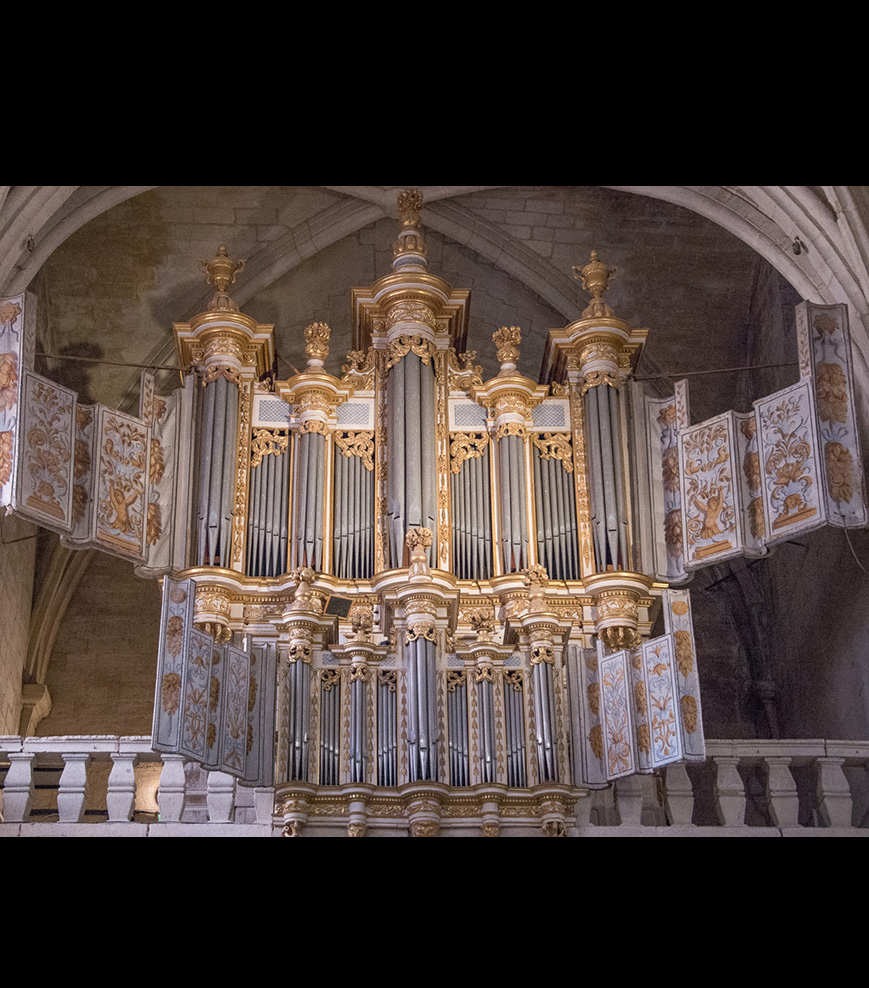
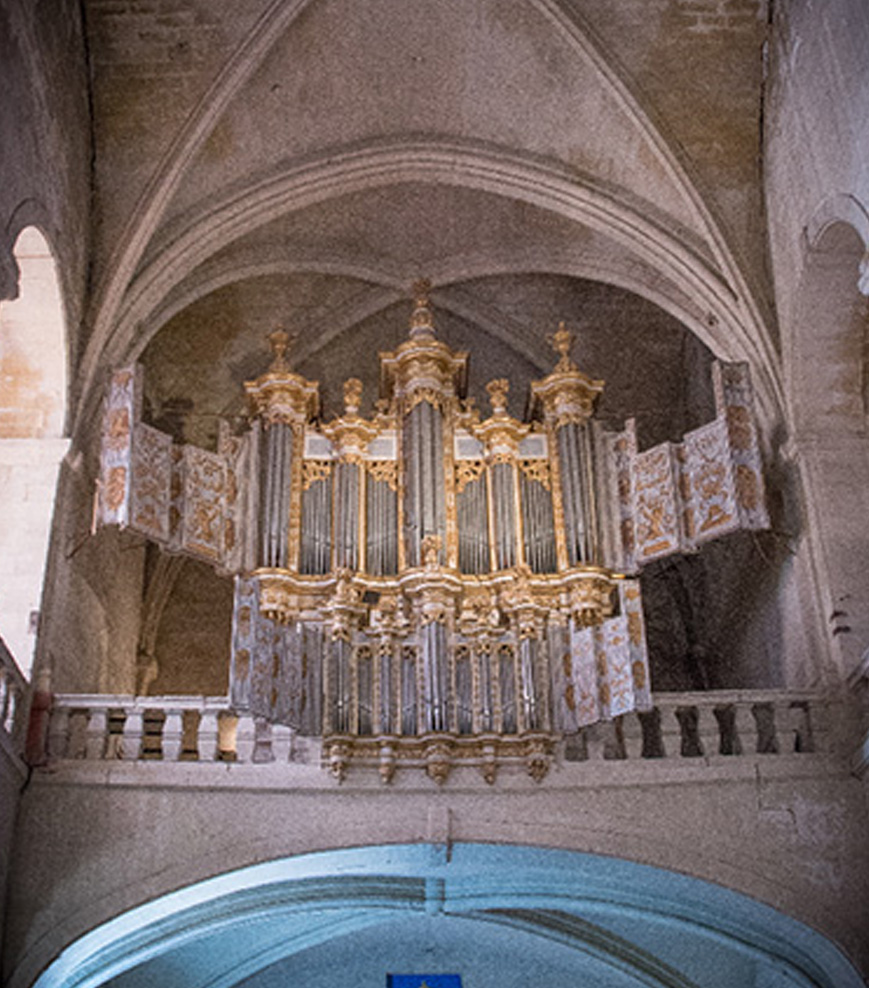
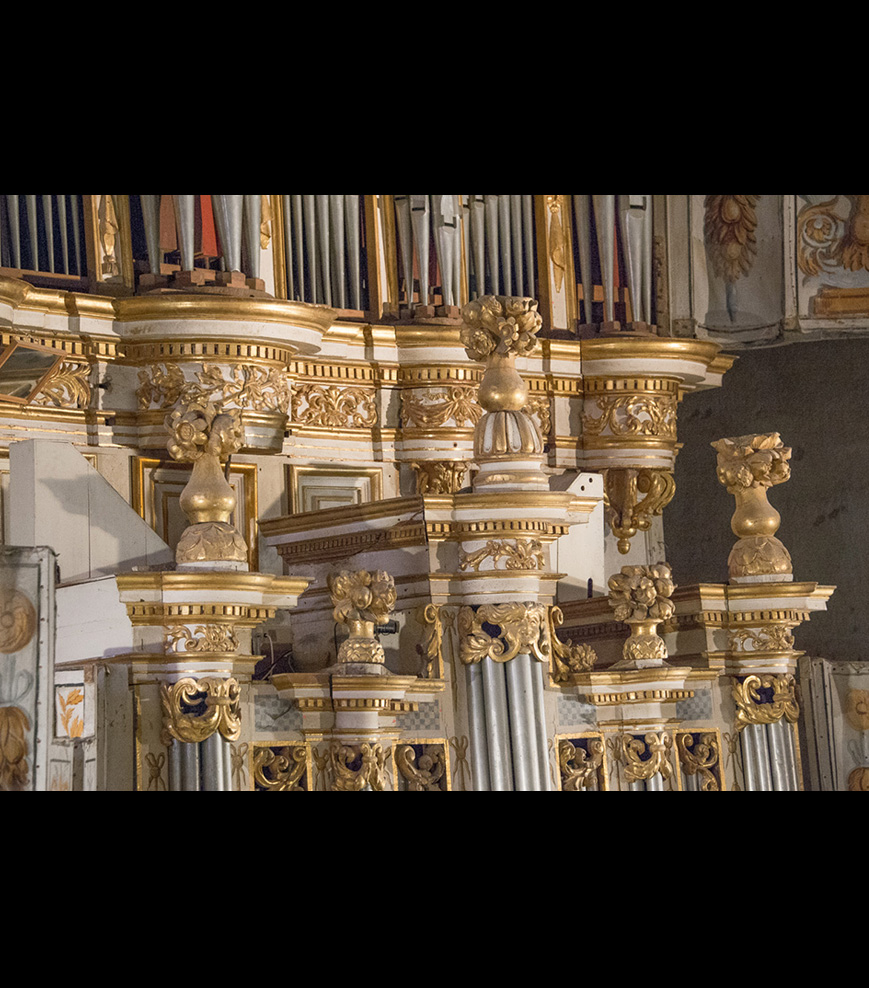
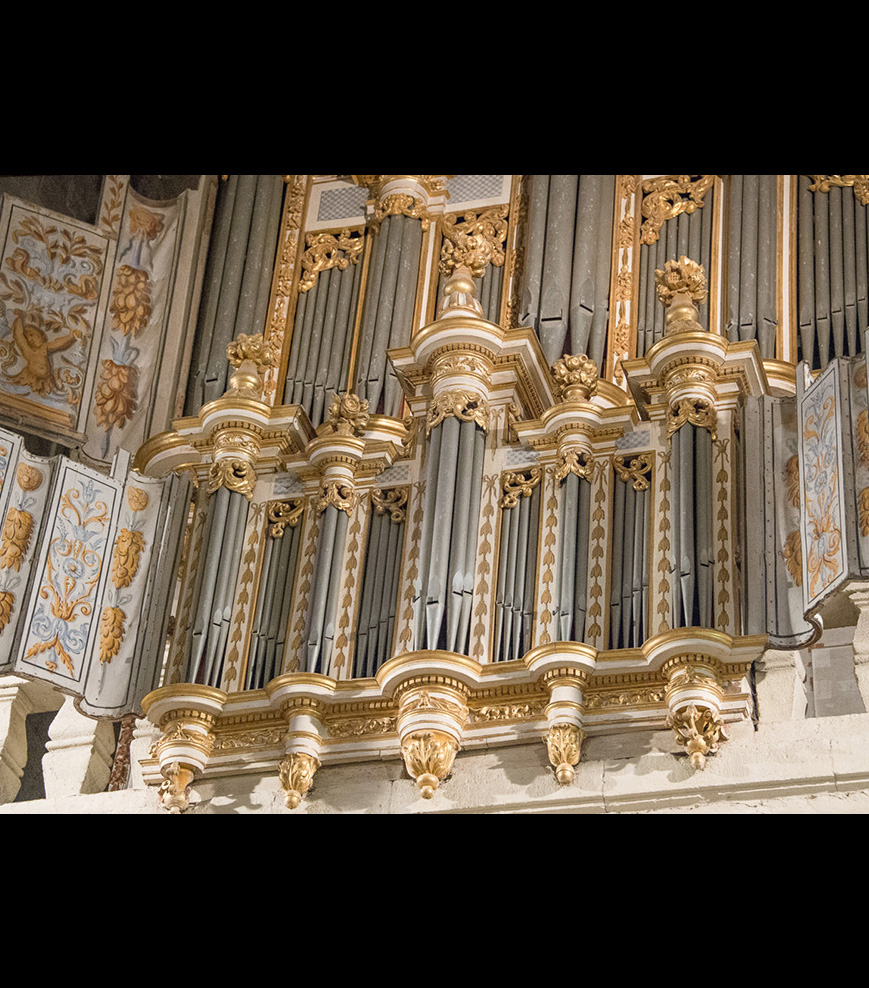
L’orgue fut commandé par l’évêque Michel II Poncet de La Rivière, le 1er Septembre 1679 pour la cathédrale d’Uzès.
La construction se termine fin 1683.
Le buffet est l’œuvre de Pierre Biscarrat de Pont Saint Esprit.
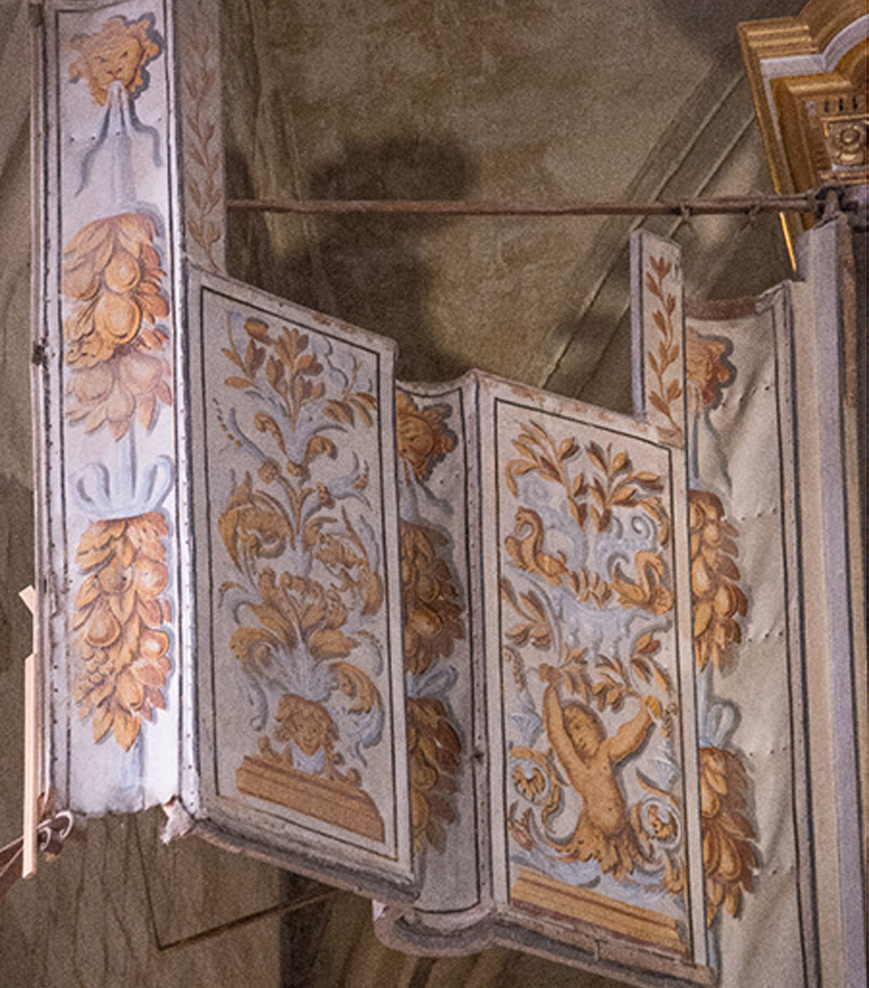
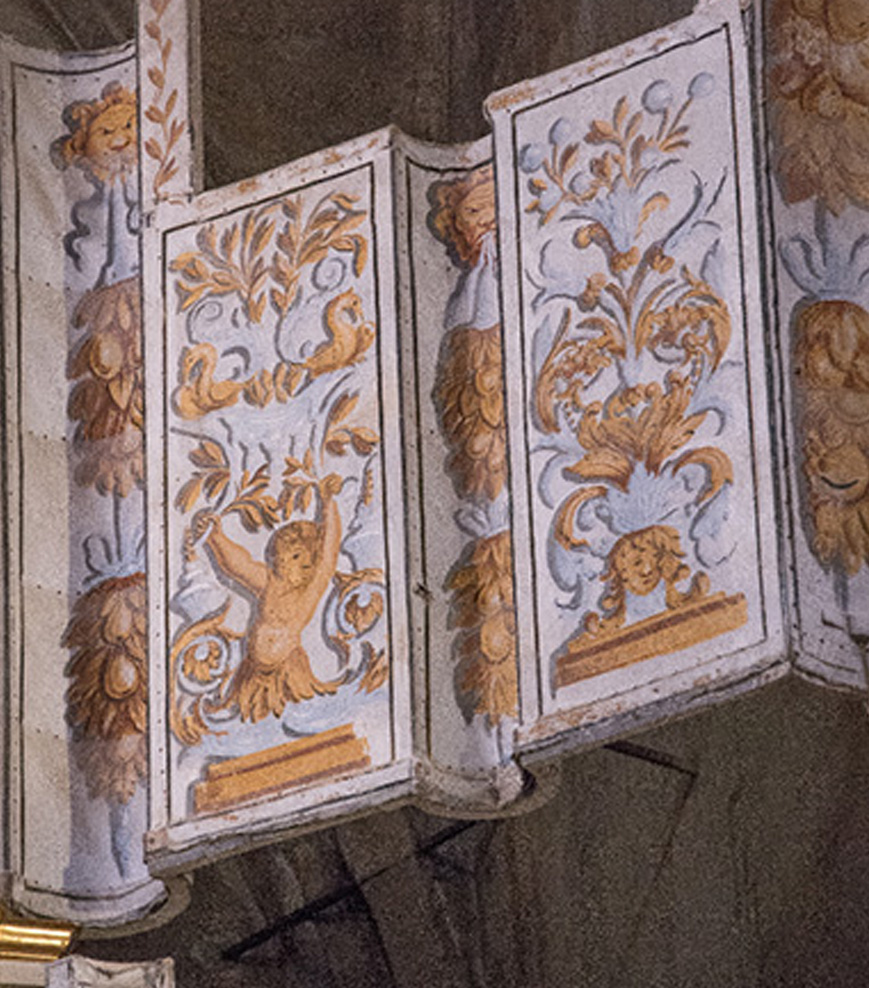
Deux ans plus tard, les volets de l’orgue furent peints par Jean Pouveille, maître-doreur de Montpellier, il a aussi peint et doré le buffet.
Cet orgue a traversé la révolution sans grand dommage, ce qui est incroyable.
Il a quand même besoin d’une restauration complète au XIXème siècle. Elle sera réalisée dans le goût romantique de l’époque, par la maison Daublaine et Callinet en 1844.
L’orgue que l’on voit est en fait une reconstitution qui a tout de même conservé environ 1100 tuyaux du XVIIème siècle. Les sommiers ont été remplacés et ceux d’origine sont conservés dans la tribune, témoins précieux du travail de l’époque.
En 1963, l ‘orgue a besoin à nouveau d’une restauration urgente. On fait appel au meilleur facteur d’orgue de l’époque, Alfred Kern de Strasbourg.
Fait unique en France, le buffet a conservé les teintes d’origine et ses volets sont toujours en place depuis le XVIIème siècle. Ils sont en toiles peintes tendues sur des châssis articulés. Le double buffet est de style Louis XIV mais tendance méridionale, avec des dorures.
Avant que la maison Daublaine et Callinet ne le restaure, l’orgue comprenait trois claviers de cinquante notes.
 The organ
The organ was ordered by the bishop Michel Poncet de la Rivière, on 1st September 1679 for the cathedral of Uzès. It was completed in 1863. The case was crafted by Pierre de Bicarrat de Pont-Saint-Esprit. Two years later, the shutters were painted by Jean Pouveille, a master gilder from Montpelleir who also painted and gilded the case.
The organ survived the revolution with little damage, which is unbelievable.However it still required a full restoration in the XIXth century.
This will be done in the romantic style of the time by the Doublaine and Callinet Company in 1844. The organ we see is in fact a restoration that retained around 1100 pipes of the XVIIth century. The windchests were replaced. In 1963, the organ needs another restoration and Alfred Kern from Strasburg, the best organ builder of the time, who preserved the finest stops from the Daublaine and Callinet Company, was hired. Uniquely in France, the case kept its original colours and the shutters have remained intact since the XVIIth century.
They are painted canvases stretched over articulated frames. The double case is in the Louis XIV style with a southern touch and gilding. Before the Daublaine and Callinet Company restored it, he organ had three fifty-note keyboards.
 L’organo
L’organo fu commissionato dal vescovo Michel Poncet de La Rivière, il primo
Settembre 1679 per la cattedrale di Uzès. La costruzione termina nel 1683. Il buffet è opera di Pierre Biscarrat de Pont Saint Esprit. Due anni dopo le persiane dell’organo furono dipinte da Jean Pouveille, maître-doreur di Montpellier, dipinse e doró anche il buffet.
Questo organo ha attraversato la rivoluzione senza grandi danni, il che è incredibile.
Ha ancora bisogno di un restauro completo nel XIX e nel XIX secolo. Sarà realizzato nel gusto romantico dell’epoca, dalla casa Doublaine e Calli nel 1844. L’organo che vediamo è in realtà una ricostruzione che ha comunque conservato circa 1100 tubi del XVII secolo. Le reti sono state sostituite. Nel 1963, l’ organo ha di nuovo bisogno di un restauro urgente. Si fa appello al miglior costruttore di organi dell’epoca, Alfred Kern di Strasburgo che mantiene i migliori giochi della casa Daublaine e Callinet.
Fatto unico in Francia, il buffet ha conservato le tonalità originali e le sue persiane sono ancora in vigore dal XVII secolo. Sono in tele dipinte tese su telai articolati. Il doppio buffet è in stile Luigi XIV ma di tendenza meridionale, con doratura.
Prima che la casa Daublaine e Callinet lo ripristinasse, l’organo comprendeva tre tastiere di cinquanta note.
 Die Orgel