
 Chemins de croix
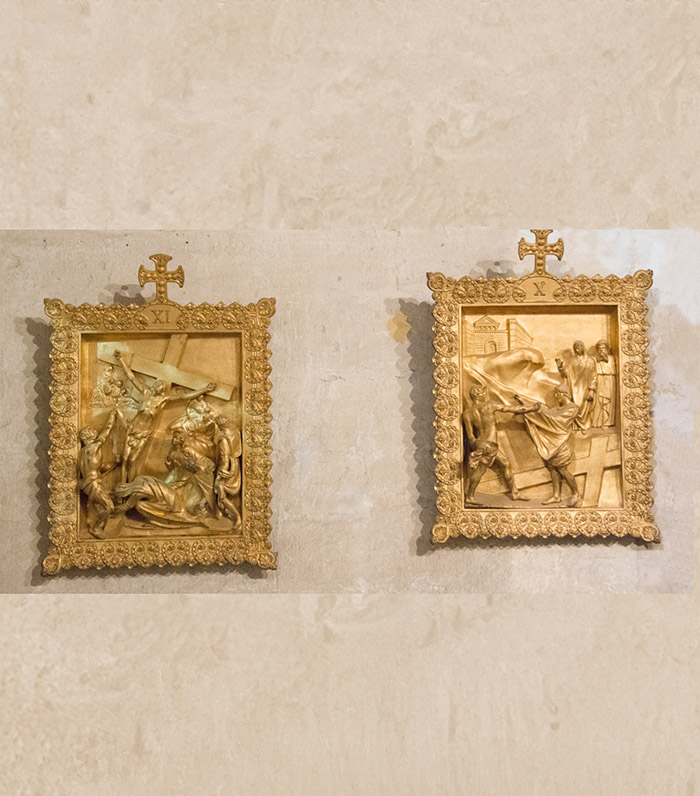
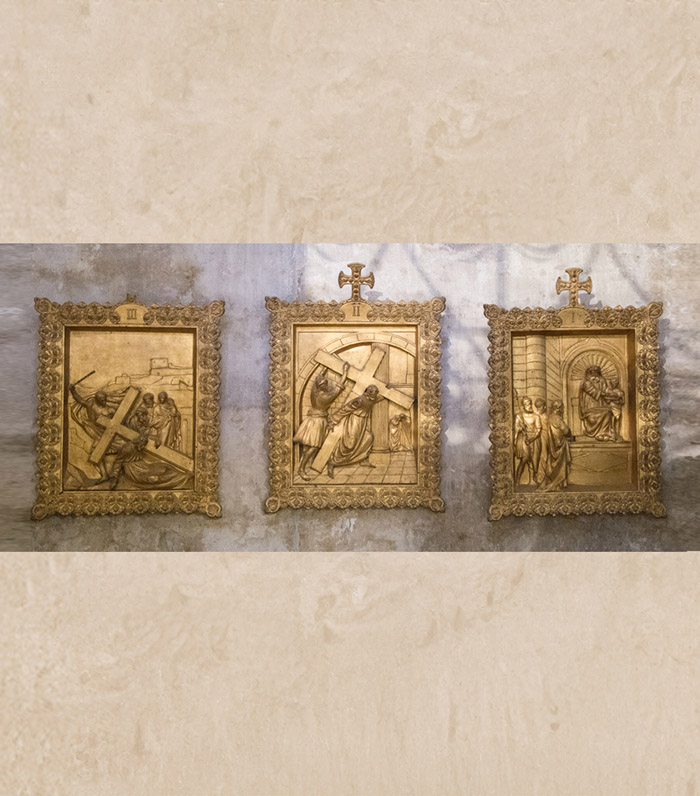
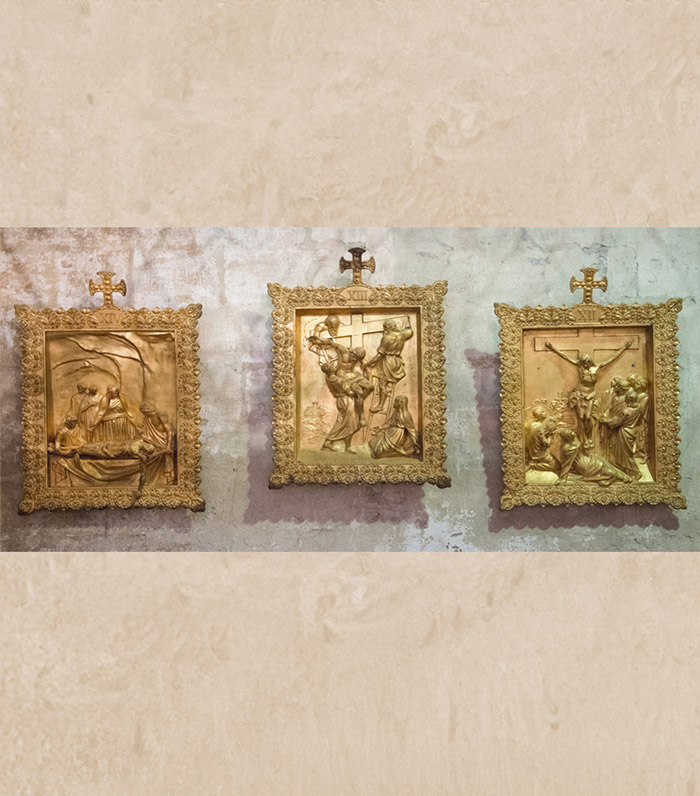
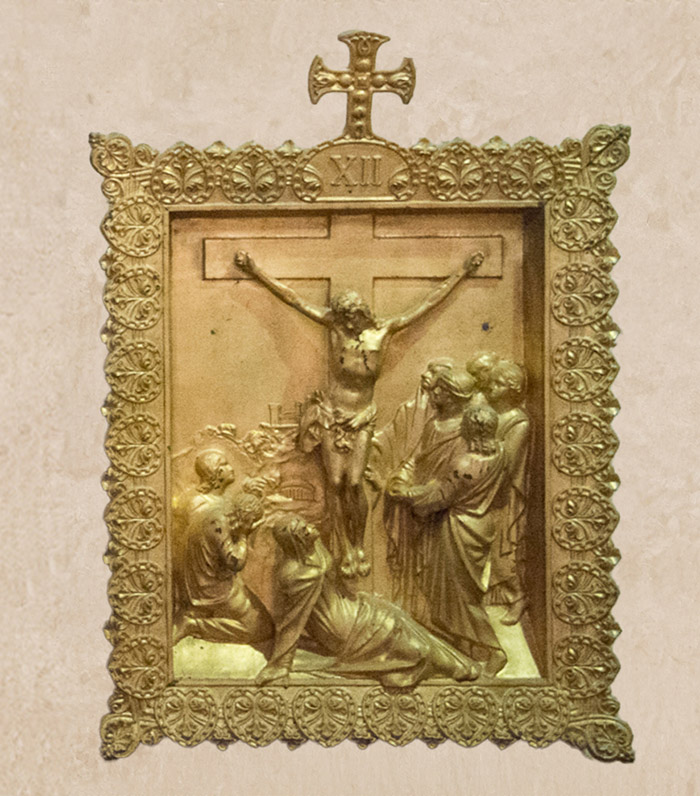
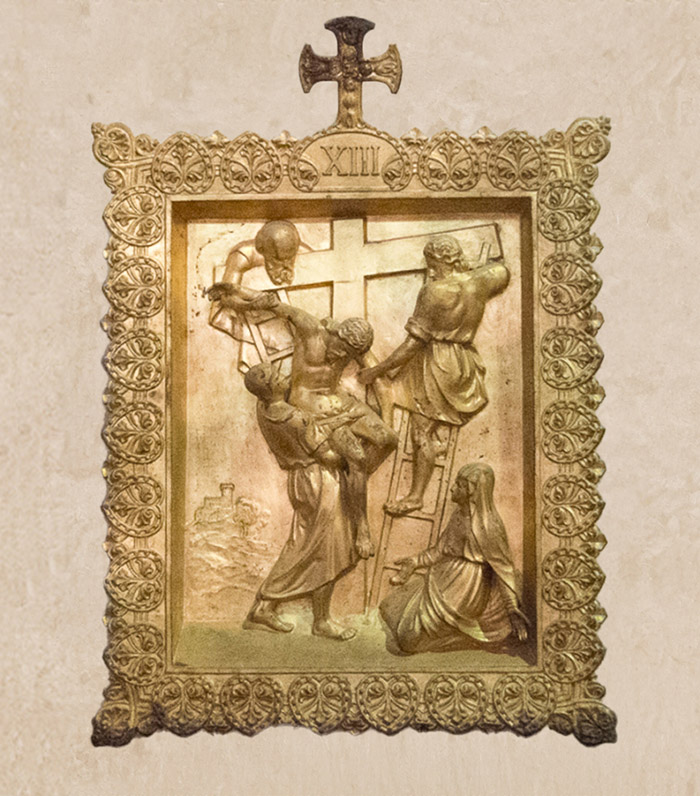
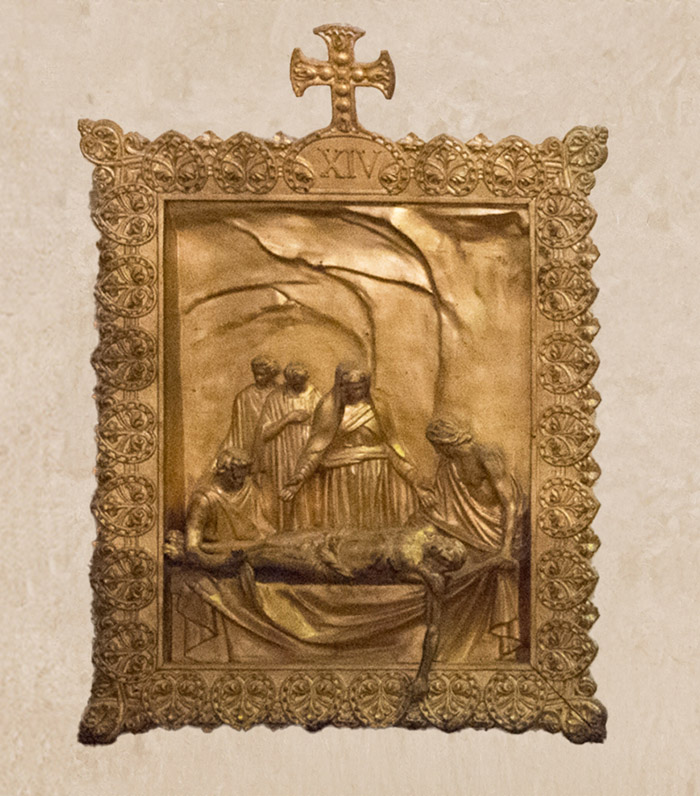
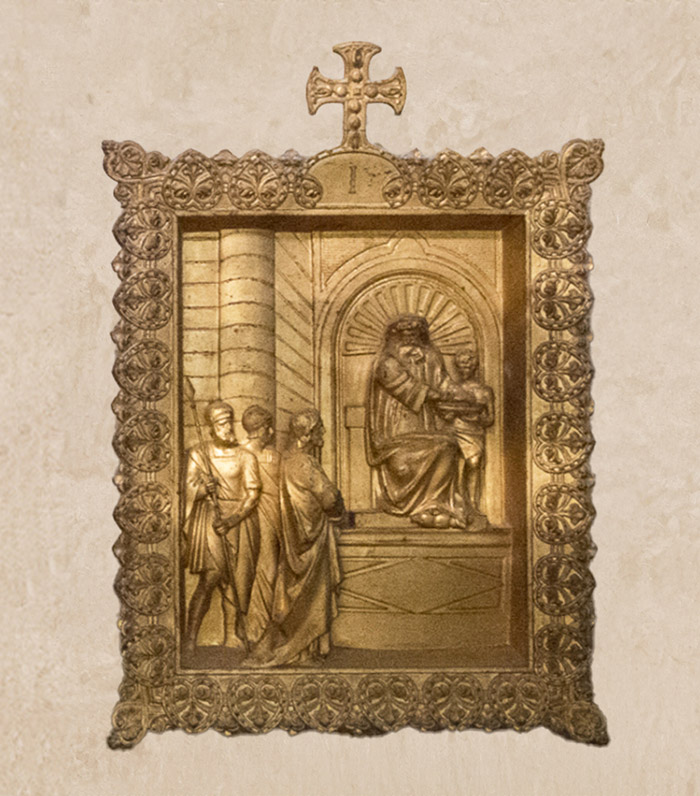
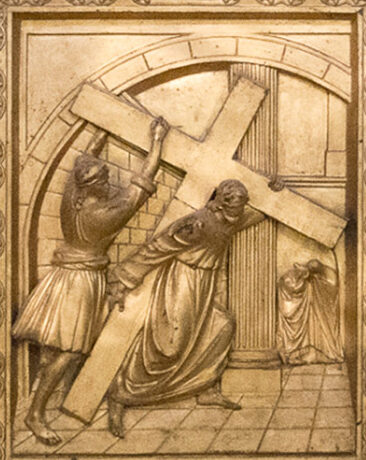
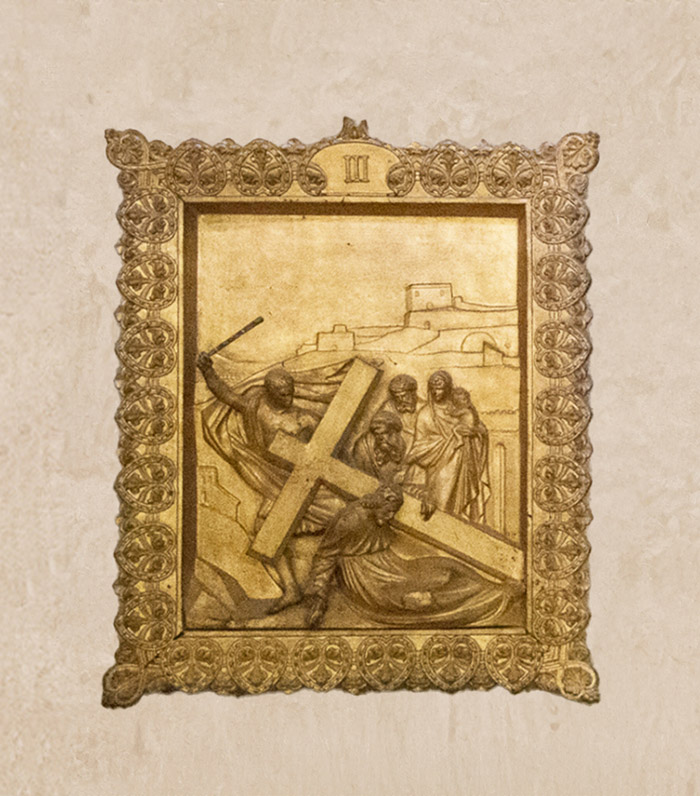
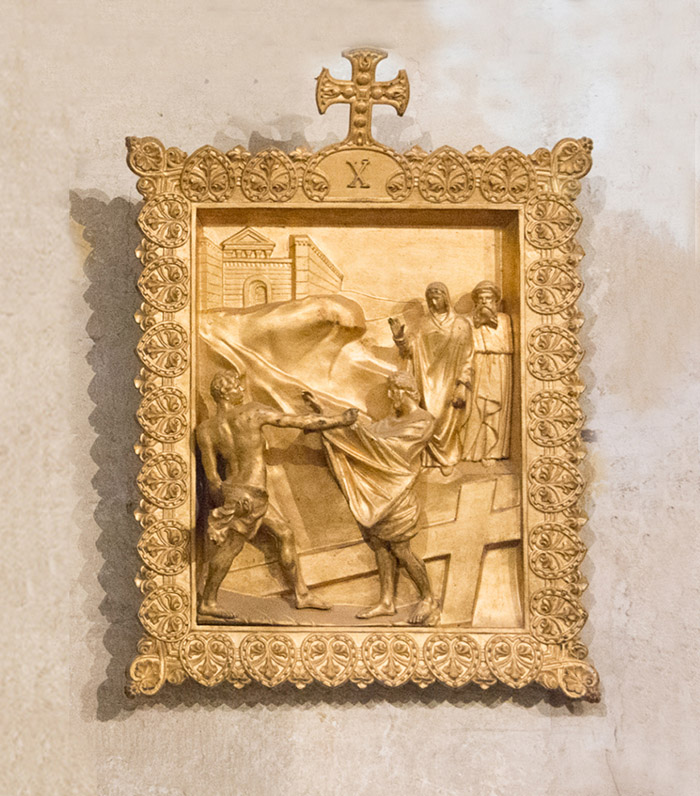
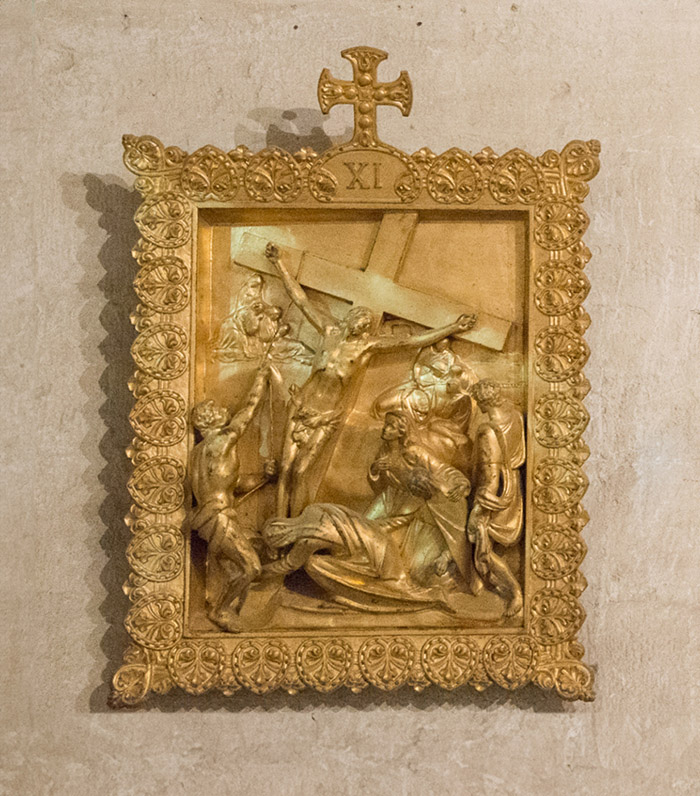
Le Chemin de croix a son origine dans la liturgie du Vendredi saint.
Il représente les différentes étapes de la Passion du Christ.
Les franciscains, qui gardaient les lieux saints depuis le XIVème siècle, aidaient les pèlerins à méditer sur la via dolorosa de Jérusalem, puis ils ont eu l’idée de transposer cette méditation sur la Passion du Christ sous forme de tableaux.
Permettant ainsi à tous ceux qui ne pouvaient pas se rendre sur les lieux saints d’accomplir la même démarche que les pèlerins.
Nombre de tableau : Il y a quatorze tableau accrochés à la partie supérieure des murs de la nef.
Chaque tableau est en bronze et pèse 70 kg.
 The Churchwarden’s Pew
The churchwardens’ pew is generally placed in churches facing the pulpit. These pews were formerly reserved for the distinguished members of the parish and the members of the Council of Fabrique.
It was sometimes topped with a cross and faced the preacher. After the Second Vatican Council, churchwardens’ pews were relocated or even removed, as were the pulpits.
Council of fabrique : A group of people responsible for managing the funds and income necessary to maintain the religious buildings and the parish furniture. They were called “marguilliers” or “fabriciens”
 Via Crucis
Il banco d’opera è generalmente posto nelle chiese di fronte alla cattedra da predicare Questi banchi erano riservati ai notabili della parrocchia e ai membri dei Consigli di fabbrica*.
A volte è sormontato da una croce e si affacciava al predittore. Dopo il Concilio Vaticano
Il i banchi d’opera vengono spostati o addirittura soppressi proprio corne le cattedre.
Consiglio di fabbrica: lnsieme di persone incaricate di amministrare i fondi e le entrate necessarie per mantenere gli edifici religiosi e i mobili della parrocchia.l membri del Consiglio di fabbrica sono chiamati marguilliers o fabriciens.
 Kreuzweg
Der Kreuzweg hat seinen Ursprung in der Liturgie des Karfreitags.
Er stellt die verschiedenen Stationen des Leidenswegs Christi dar.
Die Franziskaner, die seit dem 14. Jahrhundert die Heiligen Stätten betreuten, halfen den Pilgern, über die Via Dolorosa in Jerusalem zu meditieren.
Später kamen sie auf die Idee, diese Meditation über das Leiden Christi in Form von Bildern darzustellen.
So wurde es auch denjenigen ermöglicht, die nicht selbst ins Heilige Land reisen konnten, denselben spirituellen Weg wie die Pilger nachzuvollziehen.
Anzahl der Stationen: An den oberen Wänden des Kirchenschiffs sind vierzehn Bilder angebracht.
Jedes Bild besteht aus Bronze und wiegt 70 kg.