
 Le Lutrin ou antiphonaire
A QUOI SERT LE LUTRIN ?
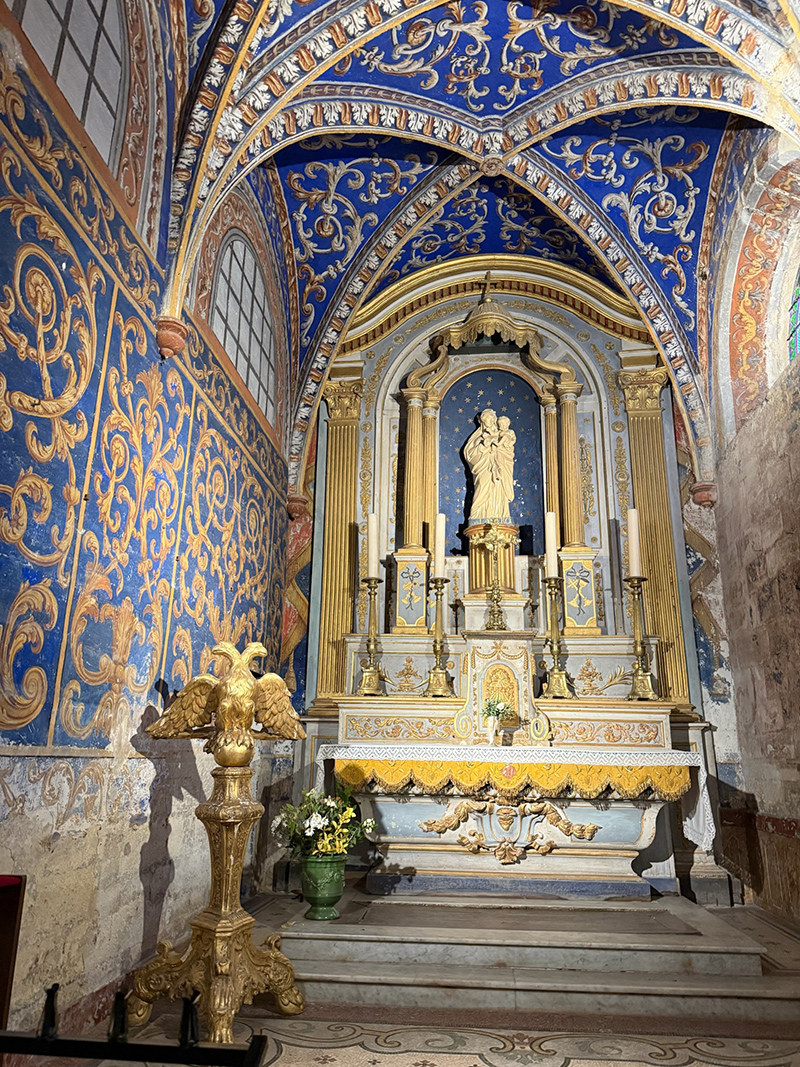
Le lutrin est le nom donné au meuble destiné à recevoir les livres de chœur (antiphonaire ou graduel). Il est aussi appelé Ambon.
Aujourd’hui il est utilisé pour les lectures lors de la célébration de la messe.
DESCRIPTION
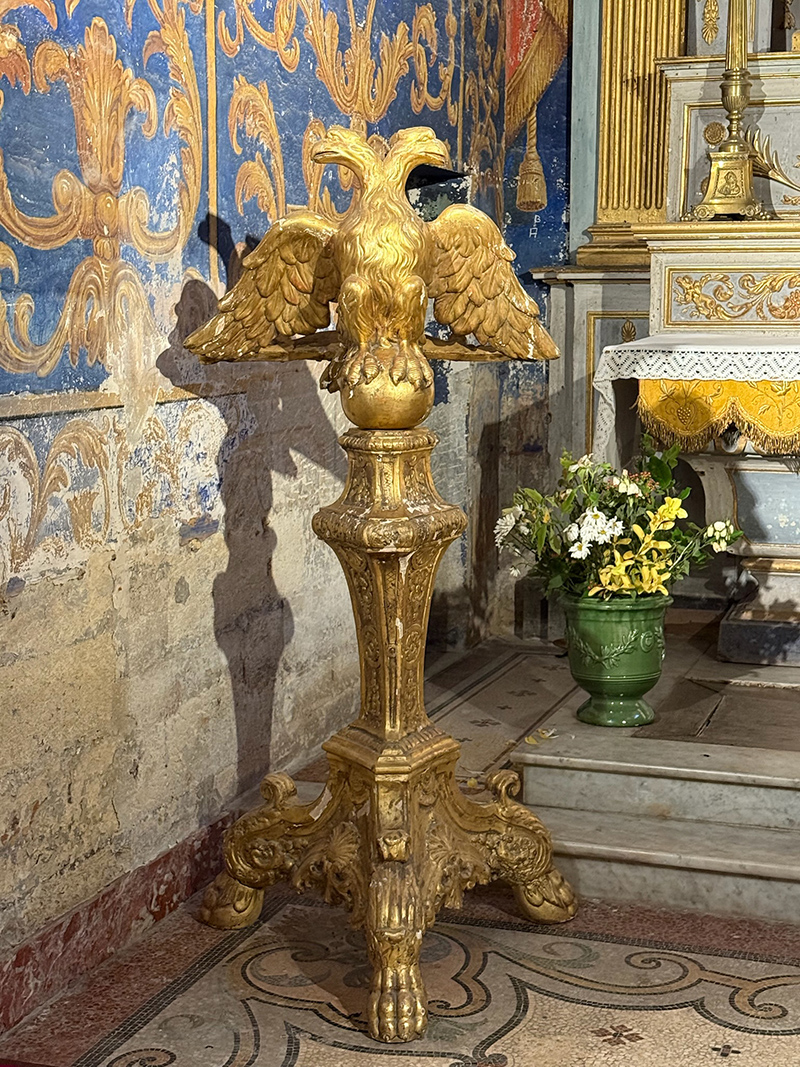
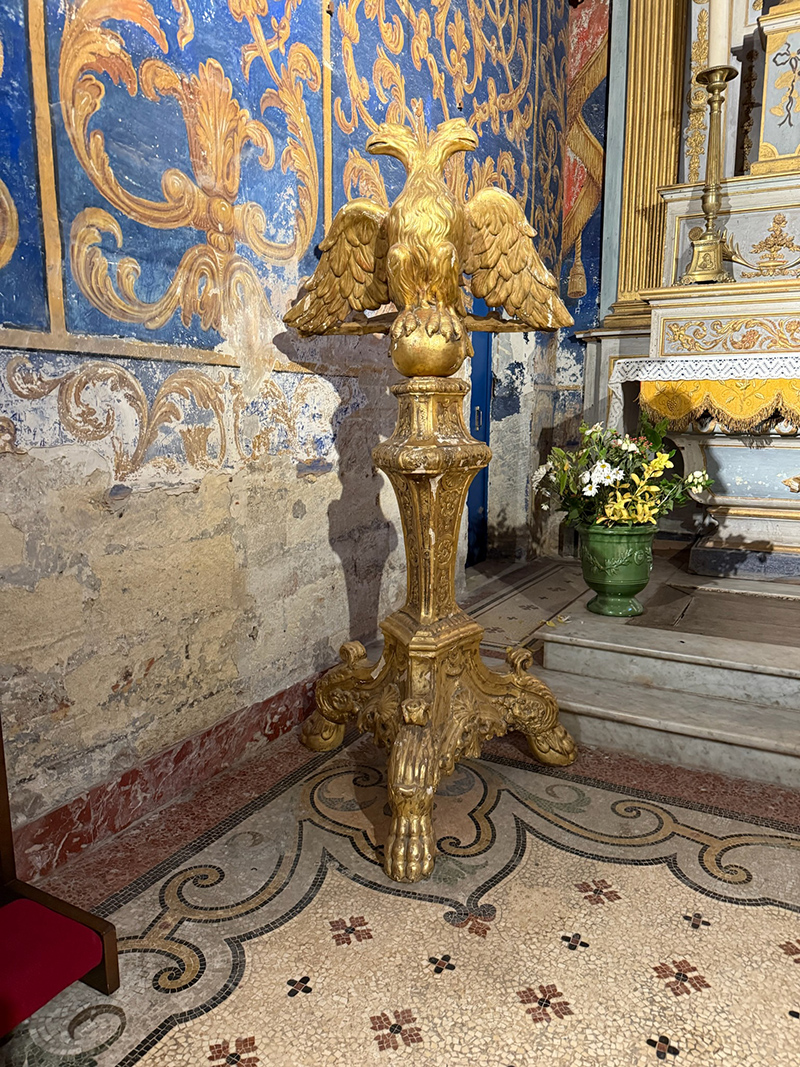
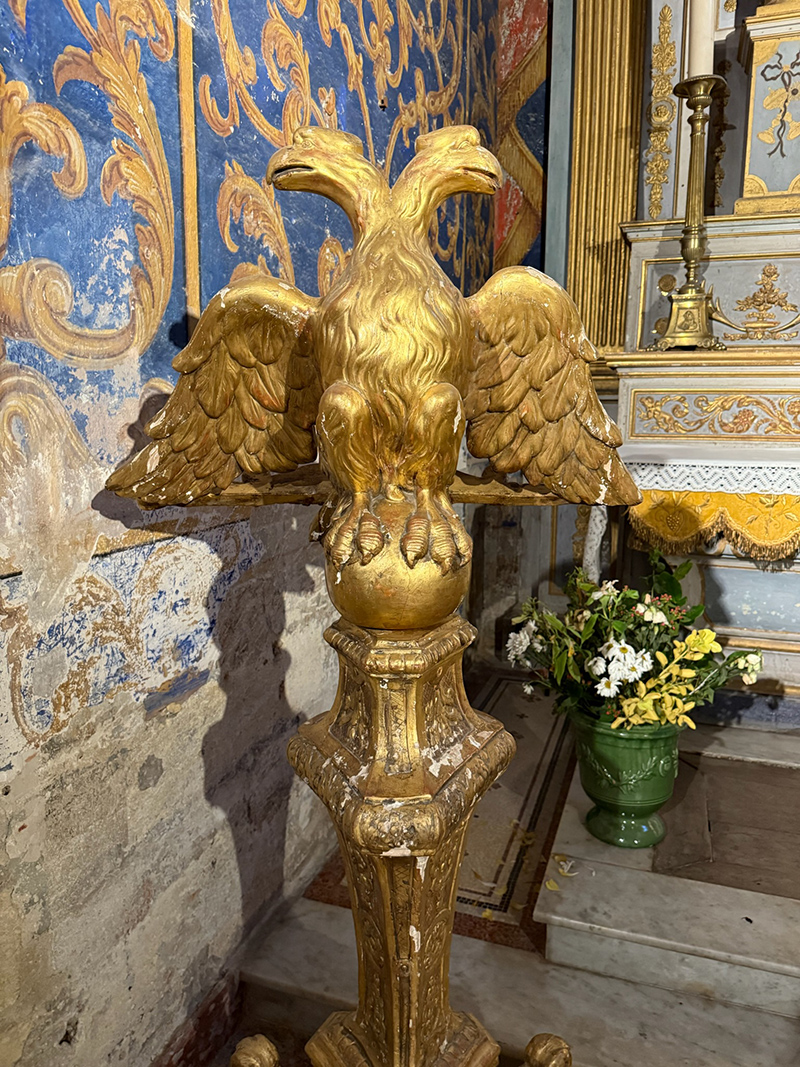
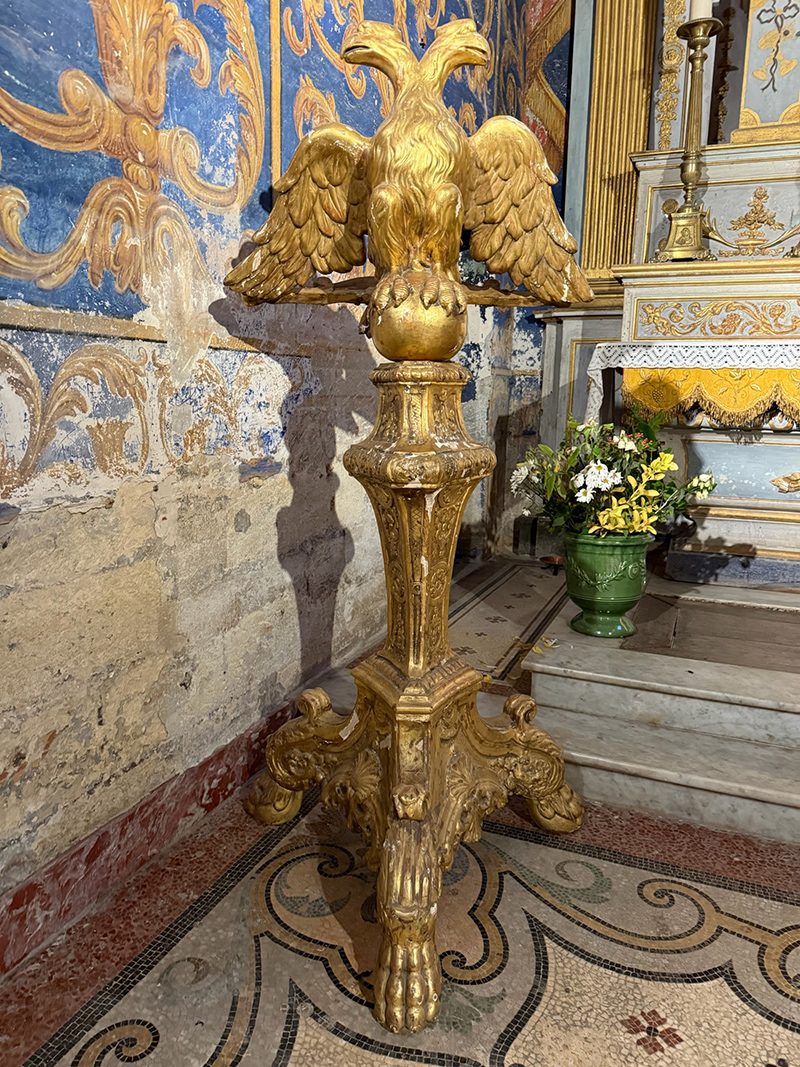
Le lutrin est réalisé en bois doré (tilleul et aulne).
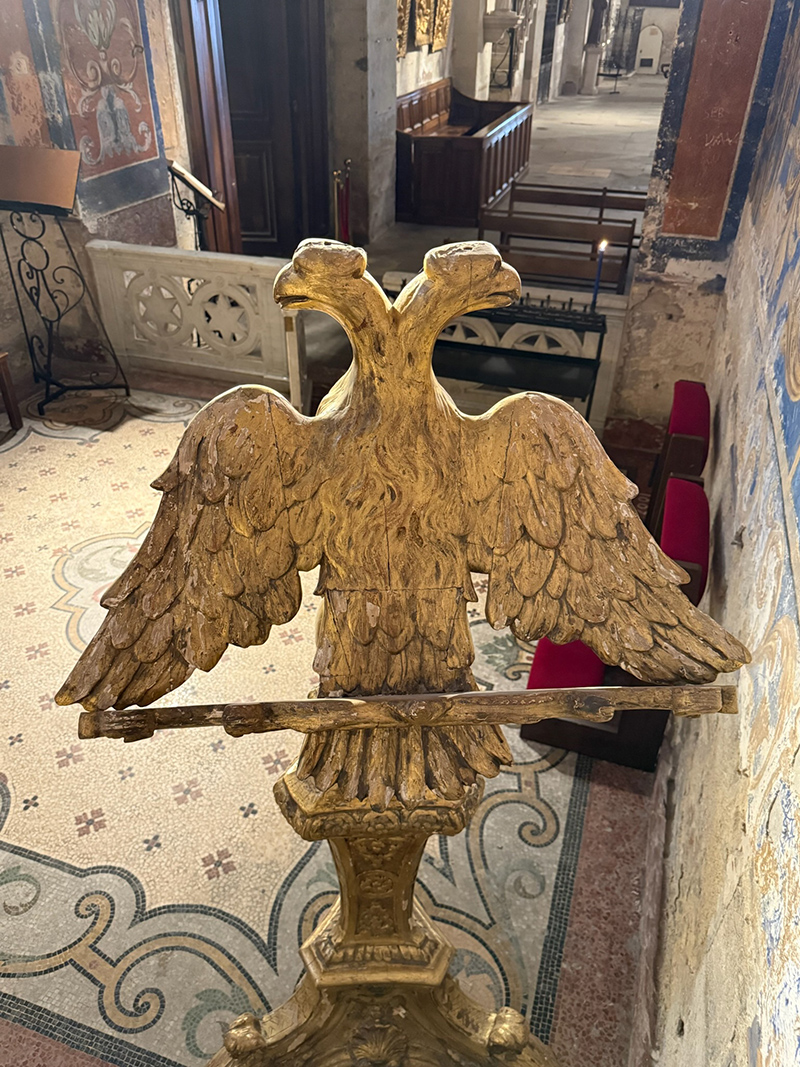
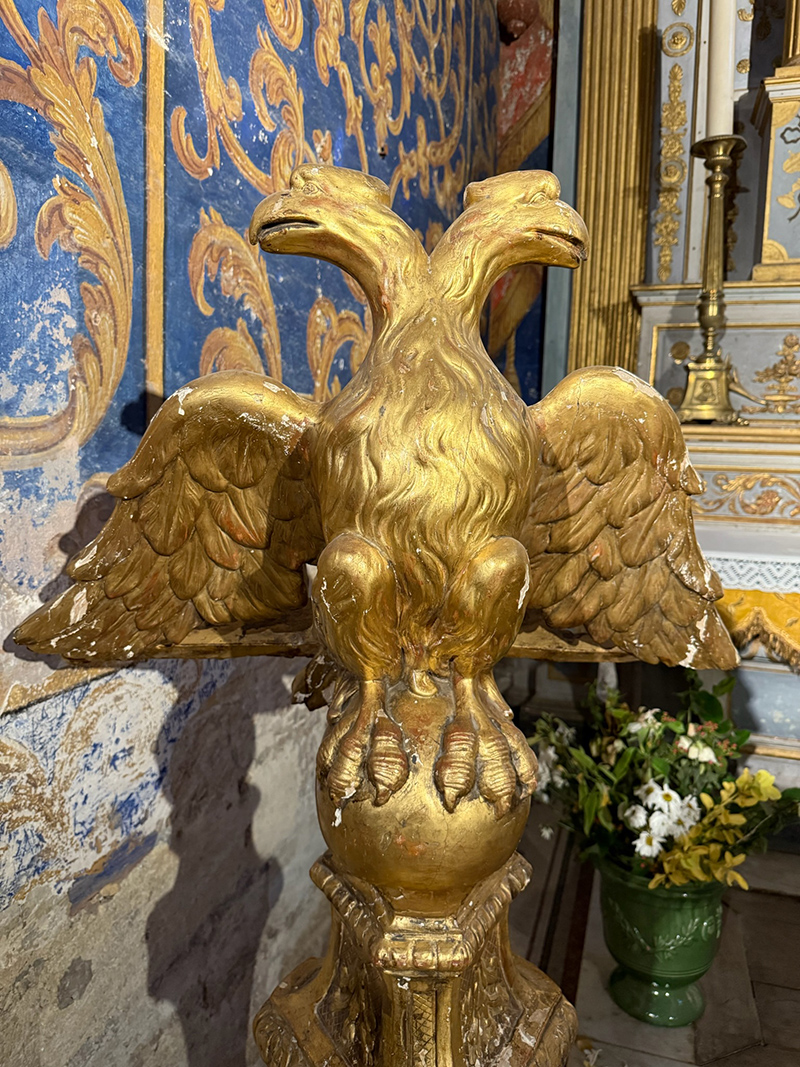
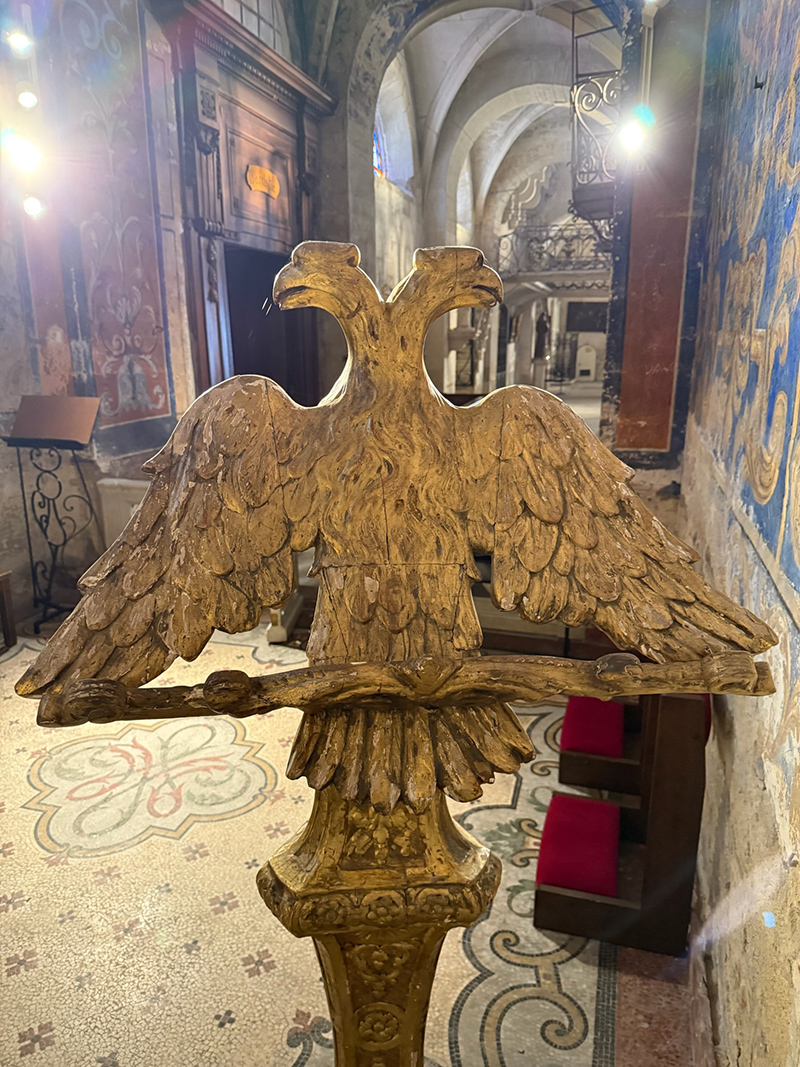
Le pupitre qui supporte le livre est d’un seul versant posé sur un aigle à ailes déployées reposant sur un globe.
Le piédestal triangulaire repose sur une base à trois pieds en forme de patte de lion.
C’est un modèle courant aux XVIIème et XVIIIème siècle. Il était placé dans le chœur. Un inventaire du 17 avril 1790 conservé aux archives départementales du Gard, indique que l’abbé d’Alleray a donné 1200 livres pour faciliter l’acquisition du lutrin en forme d’aigle.
POURQUOI UN AIGLE ?
C’est l’animal symbole de Saint Jean l’évangéliste, aussi appelé « le disciple bien aimé » de Jésus et auteur de l’Apocalypse.
L’aigle est également un oiseau volant haut dans le ciel qui peut porter ainsi les chants car il ne faut pas oublier que cet objet servait à supporter les livres de chants.
Ce lutrin à l’aigle évangéliste repose sur une sphère, symbole du monde et marquant la souveraineté du Christ sur Terre. Cet aigle à la particularité d’avoir deux têtes. Peut-être une évocation de l’ancien et du nouveau Testament ?
 The lectern
WHAT IS THE PURPOSE OF A LECTERN?
It is the name given to the piece of furniture intended to hold choir books (antiphonary or gradual). Today, it is used for readings during the celebration of mass.
DESCRIPTION
It is made of gilded wood (linden and alder). The desk that supports the book has a single slant, resting on an eagle with outspread wings on top of a globe. The triangular pedestal rests on a base with three lion’s paw-shaped feet. It’ was a standars model in the XVIIth and XVIIIth centuries. It was placed in the choir. An inventory from 17 April,1790, preserved in the Gard departmental archives indicates that the abbot of Aleray paid 1200 pounds to facilitate the acquisition of the eagle-shaped lectern.
WHY AN EAGLE?
This animal is the symbol of John the evangelist, also known as « the beloved disciple » of Jesus and author of the Apocalypse. The eagle is also a bird that flies high in the sky, symbolically carrying the hymns, as this object was originally used to support the hymn books. This lectern, adorned with the evangelist eagle, rests upon a sphere, symbolizing the world and signifying Christ’s sovereignty on Earth. This eagle is unique in that it has two heads. Perhaps an evocation of the Old and New Testaments.
 Il Leggio
A COSA SERVE IL LEGGIO?
Il leggio è il nome dato al mobile destinato a ricevere i libri di coro (antifonario o graduale). Oggi è usato per le letture durante la celebrazione della messa (ambon).
DESCRIZIONE
li leggio è realizzato in legno dorato (tiglio e orno). Il leggio che sostiene il libro è di un unico versante appoggiato su un’aquila con le ali spiegate appoggiata su un globo. Il piedistallo triangolare poggia su una base a tre piedi a forma di zampa di leone. È un modello comune nel XVIIe XVIII secolo. Era messo nel coro. Un inventario del 17 aprile 1790 conservato negli archivi dipartimentali del Gard, indica che l’abate d’Aleray ha donato 1200 libbre per facilitare l’acquisizione del lutrino a forma di aquila.
PERCHÉ UN’AQUILA?
Gesù e autore dell’Apocalisse. L’aquila è anche un uccello che vola in alto nel cielo che puó portare così i canti perché nevaut fate reles su un set serviva ?? a sostenere i libri di canti.
Questo lutrino con l’aquila evangelica si basa su una sfera, simbolo del mondo e che segna la sovranità di Cristo sulla Terra. Questa aquila ha la particolarità di avere due teste.
Forse un’evocazione dell’Antico e del Nuovo Testamento?
 Lesepult